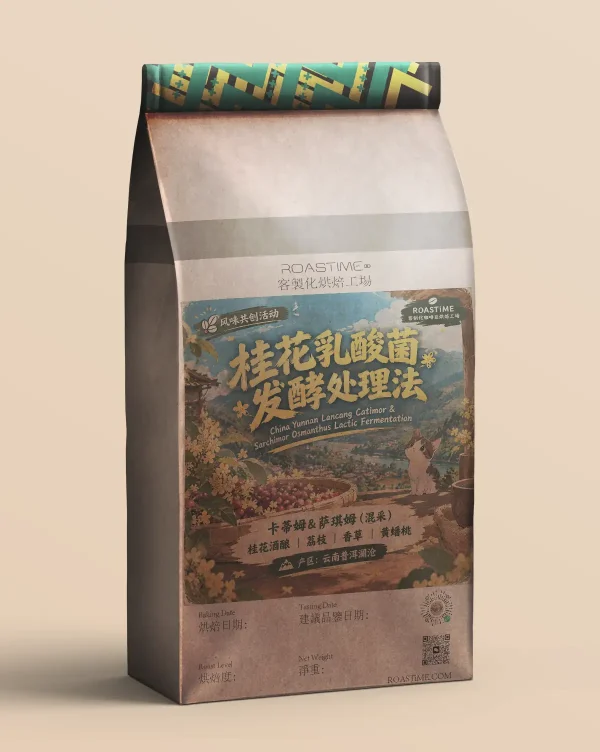
China
Osmanthus Lactic-Fermented Coffee
Osmanthus & Sweet Fermented Rice / Lychee / Vanilla / Yellow Flat Peach
A smooth, full-bodied cup with delicate osmanthus aroma, ripe-fruit sweetness, and gentle acidity. Ideal for those who prefer a mellow, rounded coffee.
Resting: Allow the coffee to rest after roasting before brewing. The ideal resting period may vary depending on roast level, brewing method, and personal preference.
COFFEE FACTS
Coffee details
- Country
- China
- Region
- Yunnan Lancang
- Varieties
- Catimor & Sarchimor
- Altitude
- 1,400–1,600 m
- Process
- Osmanthus Lactic Fermentation
- Roast profile
- Medium-dark (recommended)
- Brewing
- Suitable for pour-over and espresso. Adjust the grind size and brewing parameters to suit your preferred flavor profile.
FLAVOR PROFILE
Flavor profile
Osmanthus & Sweet Fermented Rice / Lychee / Vanilla / Yellow Flat Peach
Aroma: Gentle osmanthus florals and a comforting nutty character, with a suggestion of sweet fermented rice. Acidity and texture: Round, mellow acidity and a substantial, smooth mouthfeel rather than sharp tartness. Sweetness and finish: Notes reminiscent of lychee, ripe yellow peach and vanilla add layers of sweetness, followed by a clean floral-fruity aftertaste. Overall impression: Rich yet balanced, with a nutty-latte-like sense of comfort as a tasting metaphor only; this is coffee, not a milk-based drink. The exact expression will vary with roast level and brewing method.
ORIGIN STORY
Origin story
Varietal Background: Catimor & Sarchimor
This micro-lot from Lancang, Yunnan, brings together Catimor and Sarchimor, two coffee varietal families that are part of the region's evolving coffee story.
- Catimor: Long cultivated in Yunnan for its reliable yields and resistance to coffee leaf rust, Catimor has played an important role in the local coffee industry. Its cup quality varies with growing conditions and processing; more traditional lots can sometimes show earthy or rustic notes.
- Sarchimor: Another family known for coffee leaf rust resistance, Sarchimor has attracted interest in specialty production. With suitable growing and processing conditions, coffees from this family can offer clean sweetness, gentle citrus- or berry-like acidity, and a more delicate finish. Quality depends on the individual lot, not the varietal name alone.
Processing: Osmanthus & Lactic-Acid Fermentation
The defining feature of this coffee is its osmanthus lactic-fermentation processing style. Rather than describing it as a milk-based or artificially flavored drink, we use osmanthus to describe the floral character of the brewed coffee.
In controlled coffee fermentation, microorganisms can transform compounds in the coffee and influence the precursors that later develop into aroma and flavor during roasting. Depending on the process, this may contribute to a rounder mouthfeel, a softer perception of acidity, and greater aromatic complexity.
For this lot, the intended sensory direction is a gentle osmanthus fragrance paired with smooth texture and balanced sweetness. The exact microbial strains and fermentation recipe have not been independently verified, so no specific strain or patented procedure is claimed here.
Origin: Lancang, Pu'er, Yunnan
Lancang County is part of Pu'er City in Yunnan Province, one of China's established coffee-growing regions. Alongside traditional Catimor cultivation, producers in the wider region have been exploring other varietal families and more carefully managed processing methods.
This coffee reflects that movement toward distinctive small-lot profiles: familiar Yunnan varietals, a floral fermentation concept, and a cup designed to feel substantial yet smooth.