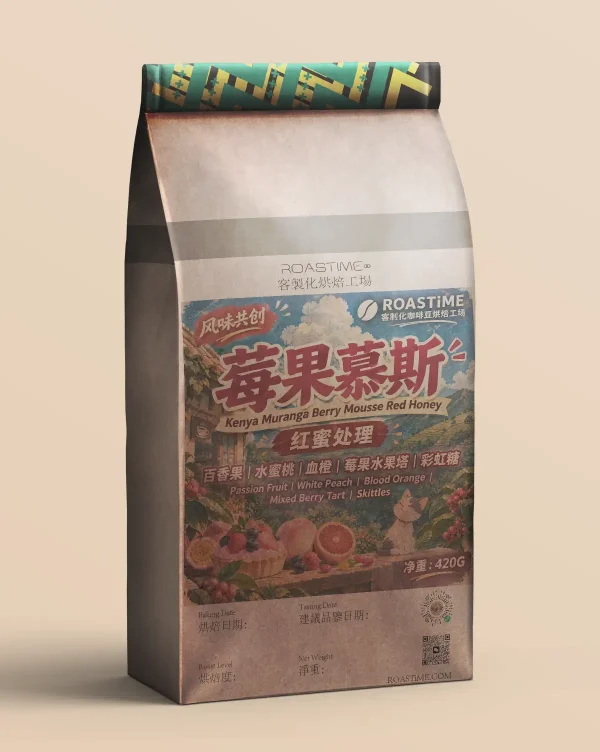
Kenya
Berry Mousse
Passion fruit · White peach · Blood orange · Mixed berry tart · Skittles
Bright passion fruit and blood orange meet ripe peach sweetness and mixed-berry dessert notes.
Resting: Resting is a suggestion, not a fixed rule. Taste at different stages after roasting; a short rest can help excess gas subside and extraction become more consistent.
COFFEE FACTS
Coffee details
- Country
- Kenya
- Region
- Murang'a, Kenya
- Process
- Red Honey
- Roast profile
- Medium-light to medium
- Brewing
- Pour-over or espresso. Start at 90–93°C with a pour-over ratio near 1:16, then adjust extraction for the desired balance of acidity and sweetness.
FLAVOR PROFILE
Flavor profile
Passion fruit · White peach · Blood orange · Mixed berry tart · Skittles
Passion fruit and blood orange provide bright, lively acidity. White peach adds soft ripeness, while mixed-berry tart and colorful fruit-candy impressions suggest a sweet, dessert-like finish.
ORIGIN STORY
Origin story
Fruit character from Kenya's Murang'a region
Murang'a lies in central Kenya's coffee-growing highlands. Varied terrain, rainfall and local growing conditions shape its coffees, which are often appreciated for vivid fruit acidity. Processing choices can bring very different textures and degrees of sweetness.
Berry Mousse follows a red-honey approach, balancing lively fruit notes with a smoother, sweeter impression.
What red honey processing means
In honey processing, the outer fruit skin is removed while some mucilage remains on the coffee during drying. The amount retained and the way drying is controlled can influence acidity, sweetness and mouthfeel.
Red honey describes a processing style; it does not mean honey is added to the beans.
Blood orange and berry dessert notes
Passion fruit and blood orange give this cup its vibrant opening. White peach contributes ripe, gentle sweetness; as the coffee cools, impressions of mixed-berry tart and fruit candy become more noticeable. These tasting notes describe sensory associations, not added dessert or candy ingredients.
Roasting and brewing
We suggest a medium-light to medium roast to keep fruit acidity distinct without sacrificing sweetness. For pour-over, start around 90–93°C with a ratio near 1:16. For espresso, a slightly longer extraction ratio may help balance the bright fruit character.
PRODUCT NOTES
Details
Process: In honey processing, the outer fruit skin is removed while some mucilage remains on the coffee during drying. The amount retained and the way drying is controlled can influence acidity, sweetness and mouthfeel. Red honey describes a processing style; it does not mean honey is added to the beans.
Packaging: The 500g / 1000g options refer to green-coffee input weight; roasted yield varies with roast level.